
As businesses grow, their financial needs become more complex.
What starts as basic bookkeeping often evolves into something much larger—financial reporting, process management, compliance, and decision support.
At a certain point, many companies realize they don’t just need bookkeeping.
They need an accounting department.
But building an internal team isn’t always the best option.
That’s where an outsourced accounting department comes in.
What Is an Outsourced Accounting Department?
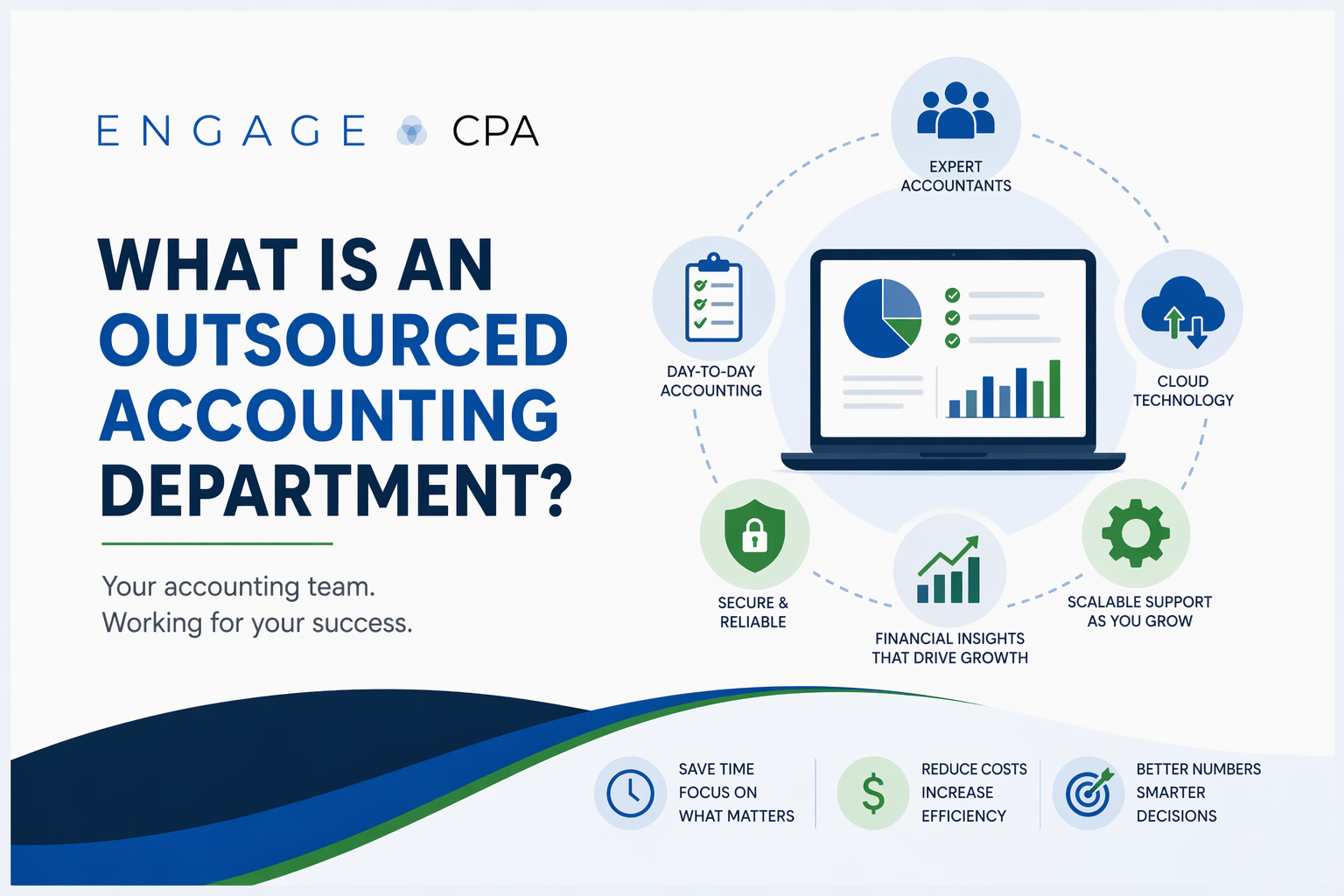
An outsourced accounting department is a structured, external team that manages a company’s financial operations.
Instead of hiring in-house staff, businesses work with a CPA-led team responsible for:
• maintaining financial records
• producing consistent financial reports
• managing accounting workflows
• ensuring tax and compliance readiness
It functions similarly to an internal accounting team—but without the need to hire, train, or manage employees.
What Does an Outsourced Accounting Department Include?
An outsourced accounting department typically covers multiple functions.
Bookkeeping
• transaction recording
• account reconciliations
• expense tracking
Financial Reporting
• monthly financial statements
• performance reporting
• variance analysis
Accounting Oversight
• review of financial data
• process consistency
• internal controls
Year-End and Tax Readiness
• organized financial records
• preparation for corporate tax filings (T2)
• coordination with tax professionals
Financial Systems and Processes
• workflow structure
• documentation
• system integration (e.g., QuickBooks Online, Dext, Hubdoc)
When Do Businesses Need an Outsourced Accounting Department?
Most businesses don’t start with an accounting department.
But many reach a point where bookkeeping alone is no longer enough.
👉 If you’re unsure whether you’ve reached that stage, read:
/resources/signs-your-business-has-outgrown-bookkeeping
Common indicators include:
• increasing transaction volume
• delayed or inconsistent financial reporting
• lack of confidence in financial data
• growing operational complexity
• leadership needing better financial visibility
At this stage, the business requires structure—not just more effort.
Outsourced Accounting vs Hiring an Internal Team
One of the biggest decisions growing businesses face is whether to hire internally or outsource.
Hiring Internally
Building an internal team often includes:
• bookkeeper
• accountant
• controller
While this can work, it comes with:
• hiring challenges
• onboarding and training
• ongoing management
• salary and overhead costs
Outsourcing the Accounting Function
Outsourcing provides:
• immediate access to a team
• consistent financial processes
• reduced management overhead
• predictable monthly cost
👉 Learn more in:
/resources/outsourced-accounting-vs-hiring-internal-accountant
Why Many Growing Businesses Choose to Outsource
For many companies, outsourcing is not just about cost—it’s about structure and reliability.
An outsourced accounting department provides:
• consistent monthly reporting
• organized financial processes
• reliable, tax-ready financial records
• continuity (no disruption from turnover or absences)
It removes many of the challenges associated with building and managing an internal team.
Outsourced Accounting for Businesses in Calgary and Across Canada
For growing businesses in Calgary, Alberta, and across Canada, outsourced accounting is becoming a more common model.
As companies scale, they need:
• reliable financial data
• consistent reporting cycles
• structured accounting processes
An outsourced accounting department provides this without requiring companies to build a full in-house finance function.
How Engage CPA Provides an Outsourced Accounting Department
Engage CPA offers a CPA-led outsourced accounting department designed for growing businesses.
Our team supports companies by:
• maintaining accurate financial records
• producing consistent monthly reports
• structuring accounting workflows
• preparing financial data for year-end and tax compliance (T2)
We work with businesses across Calgary and Canada to ensure their financial operations remain organized and reliable as they grow.
How This Fits With Bookkeeping and Accounting
Outsourced accounting departments build on both bookkeeping and accounting.
👉 If you’re still early stage, you may only need bookkeeping.
👉 If your business is growing, you may need more structure.
Read:
• /resources/bookkeeping-vs-accounting-growing-business
• /resources/signs-your-business-has-outgrown-bookkeeping
These articles explain how financial needs evolve as businesses grow.
Frequently Asked Questions
What is the difference between outsourced accounting and bookkeeping?
Bookkeeping focuses on recording transactions. Outsourced accounting includes reporting, oversight, and financial structure.
Is outsourced accounting suitable for small businesses?
It is typically most beneficial for growing businesses that have outgrown basic bookkeeping but are not ready to build a full internal accounting team.
How much does an outsourced accounting department cost?
Costs vary depending on the complexity of the business, but many services start around a few thousand dollars per month—often less than hiring internal staff.
Final Thoughts
An outsourced accounting department provides growing businesses with the financial structure they need without the complexity of building an internal team.
As financial operations become more important to decision-making, having consistent reporting, reliable data, and organized processes becomes essential.
For many companies, outsourcing is the most efficient way to achieve that structure while continuing to focus on growth.

