
Most businesses begin with simple bookkeeping.
At the early stages, bookkeeping does exactly what it should: it records transactions, keeps financial records organized, and produces basic reports for tax preparation.
But as companies grow, something starts to change.
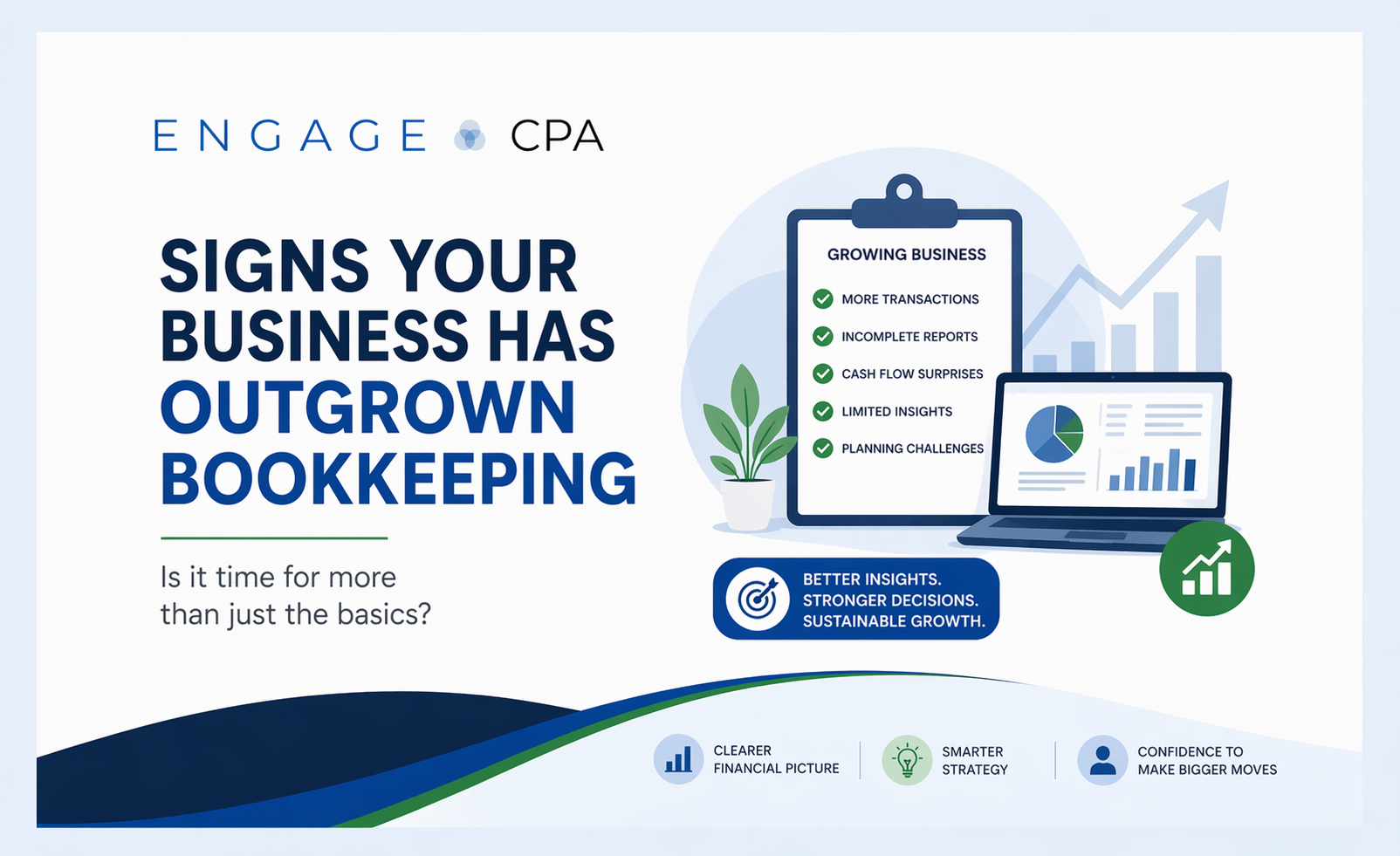
Many businesses reach a point where they’ve outgrown bookkeeping, even if it’s still being done correctly.
Reports arrive later than expected.
Numbers don’t always feel reliable.
Tax season becomes stressful.
For many founders and leadership teams, this creates a quiet but persistent concern that something isn’t working the way it should.
This usually happens somewhere between $1M and $5M in revenue, when financial operations become more complex than basic bookkeeping can support.
In this article, we’ll look at the most common signs a business has outgrown bookkeeping—and what growing companies typically do next.
What Bookkeeping Actually Does
Before looking at the warning signs, it helps to understand what bookkeeping is designed to do.
Bookkeeping focuses on the day-to-day recording of financial transactions.
Typical bookkeeping responsibilities include:
• recording income and expenses
• categorizing transactions
• reconciling bank and credit card accounts
• maintaining basic financial records
For small businesses, this is often enough.
But bookkeeping alone doesn’t usually provide the structure needed for companies that are growing quickly or becoming more operationally complex.
That’s where the gap begins to appear.
When Does a Business Outgrow Bookkeeping?
Most businesses don’t suddenly decide to move beyond bookkeeping.
Instead, they gradually realize that their financial processes aren’t keeping up with the business.
This typically happens when:
• transaction volume increases significantly
• teams grow beyond a few employees
• leadership needs consistent financial reporting
• decisions depend on accurate, timely financial data
At this stage, bookkeeping is still necessary—but it’s no longer sufficient on its own.
Why Bookkeeping Breaks Down as Businesses Grow
Growth is positive, but it creates pressure on financial systems.
More customers mean more invoices.
More employees mean more payroll complexity.
More vendors mean more accounts payable activity.
At the same time, leadership teams begin relying on financial data to make decisions about hiring, investments, and expansion.
Without structured financial processes, bookkeeping alone can struggle to keep up.
The result is not necessarily poor bookkeeping.
It’s a mismatch between the needs of the business and the financial structure supporting it.
5 Signs Your Business Has Outgrown Bookkeeping
1. Financial Reports Are Always Late
One of the earliest signs is delayed financial reporting.
When reports arrive weeks after month-end, leadership teams lose the ability to make timely decisions.
Growing businesses need consistent, predictable reporting to understand performance.
2. Leadership Doesn’t Fully Trust the Numbers
Many founders quietly admit they don’t fully trust their financial reports.
This often comes from:
• inconsistent reconciliations
• unclear reporting processes
• disorganized financial workflows
Without confidence in the numbers, decision-making becomes difficult.
3. Accounting Processes Feel Disorganized
As businesses grow, financial processes often become fragmented.
Examples include:
• invoices tracked outside accounting systems
• inconsistent expense tracking
• scattered documentation
• unclear approval workflows
These inefficiencies create friction across the organization.
4. Tax Season Is Always Stressful
A common pattern:
Tax season arrives → everything becomes reactive.
Receipts need to be gathered.
Transactions need to be cleaned up.
Reports need to be recreated.
When financial records are properly structured year-round, tax preparation becomes much simpler.
5. Leadership Needs Better Financial Visibility
As companies grow, leadership starts asking deeper questions:
How profitable are we by service line?
Which clients drive the most revenue?
How should we plan hiring based on performance?
Basic bookkeeping doesn’t provide this level of visibility.
Why Growing Businesses Need More Than Bookkeeping
At this stage, the issue isn’t effort—it’s structure.
What’s missing is financial infrastructure.
A structured accounting function provides:
• consistent monthly reporting
• organized financial workflows
• reliable financial records for compliance
• clear financial visibility for leadership
This is the role of an accounting department.
👉 Learn more in our guides:
/resources/bookkeeping-vs-accounting-growing-business
/resources/what-is-outsourced-accounting-department
What Growing Businesses Usually Do Next
When bookkeeping is no longer enough, businesses typically consider three options.
Option 1: Hire Internal Accounting Staff
Build an internal team:
• bookkeeper
• accountant
• controller
This provides structure—but requires hiring, management, and cost.
Option 2: Expand the Role of the Bookkeeper
Some businesses try to stretch the role.
This can work temporarily, but it rarely solves structural issues.
Option 3: Use an Outsourced Accounting Department
Many growing businesses choose to outsource.
This provides:
• structured financial reporting
• organized accounting processes
• ongoing oversight
👉 Learn more here:
/resources/outsourced-accounting-vs-hiring-internal-accountant
How Engage CPA Helps Growing Businesses
Engage CPA provides a CPA-led outsourced accounting department for growing businesses across Calgary, Alberta, and Canada.
Our team helps companies:
• maintain accurate financial records
• produce consistent monthly reports
• organize accounting systems and workflows
• keep financial records ready for tax compliance
This allows leadership teams to focus on running the business, knowing their financial operations are structured and reliable.
Frequently Asked Questions
How do I know if I’ve outgrown bookkeeping?
If financial reports are delayed, numbers feel unreliable, or processes are disorganized, your business may have outgrown basic bookkeeping.
What’s the difference between bookkeeping and accounting?
Bookkeeping records transactions. Accounting provides structure, reporting, and financial oversight.
When should a business move beyond bookkeeping?
Typically between $1M–$5M in revenue, or when financial complexity increases significantly.
Final Thoughts
Outgrowing bookkeeping is a normal stage of growth.
As businesses expand, the financial systems supporting them need to evolve as well.
Recognizing the signs early allows companies to build a structured accounting function before financial operations become disorganized.
If your business is experiencing these challenges, it may be time to move beyond bookkeeping and build a more reliable financial foundation.

